
Periodontal Disease
Periodontal disease is one of the most common dental conditions affecting horses. It occurs when the tissues surrounding and supporting a tooth become inflamed or infected. As the disease progresses, it can damage the periodontal ligament and surrounding bone, eventually leading to tooth loosening and loss. While some dental problems are easy to see, periodontal disease develops between teeth, which makes an oral exam with a mirror crucial for identifying it.
What Causes Periodontal Disease?
Every horse is different. While some horses may show signs of an underlying problem, many do not. Periodontal disease is most commonly caused by feed packing between teeth in a gap called a diastema. When feed becomes trapped, it can begin to decompose and damage the gingiva (gums) and the surrounding tooth structures. Because horses can continue to eat even with significant periodontal disease, a thorough oral exam is crucial for early detection and treatment.
Treatment Options
Treatment of this depends on the severity. When we do our oral exam if periodontal disease is discovered we will diagnose the severity and then treat is accordingly which include:
Cleaning out and the flushing the pockets
Packing the cleaned out pockets with dental impression material
Odontoplasty
Occlusal Relief Cuts
Extraction of loosened teeth
Below are some of pictures showing the treatment of periodontal disease and the treatment options.
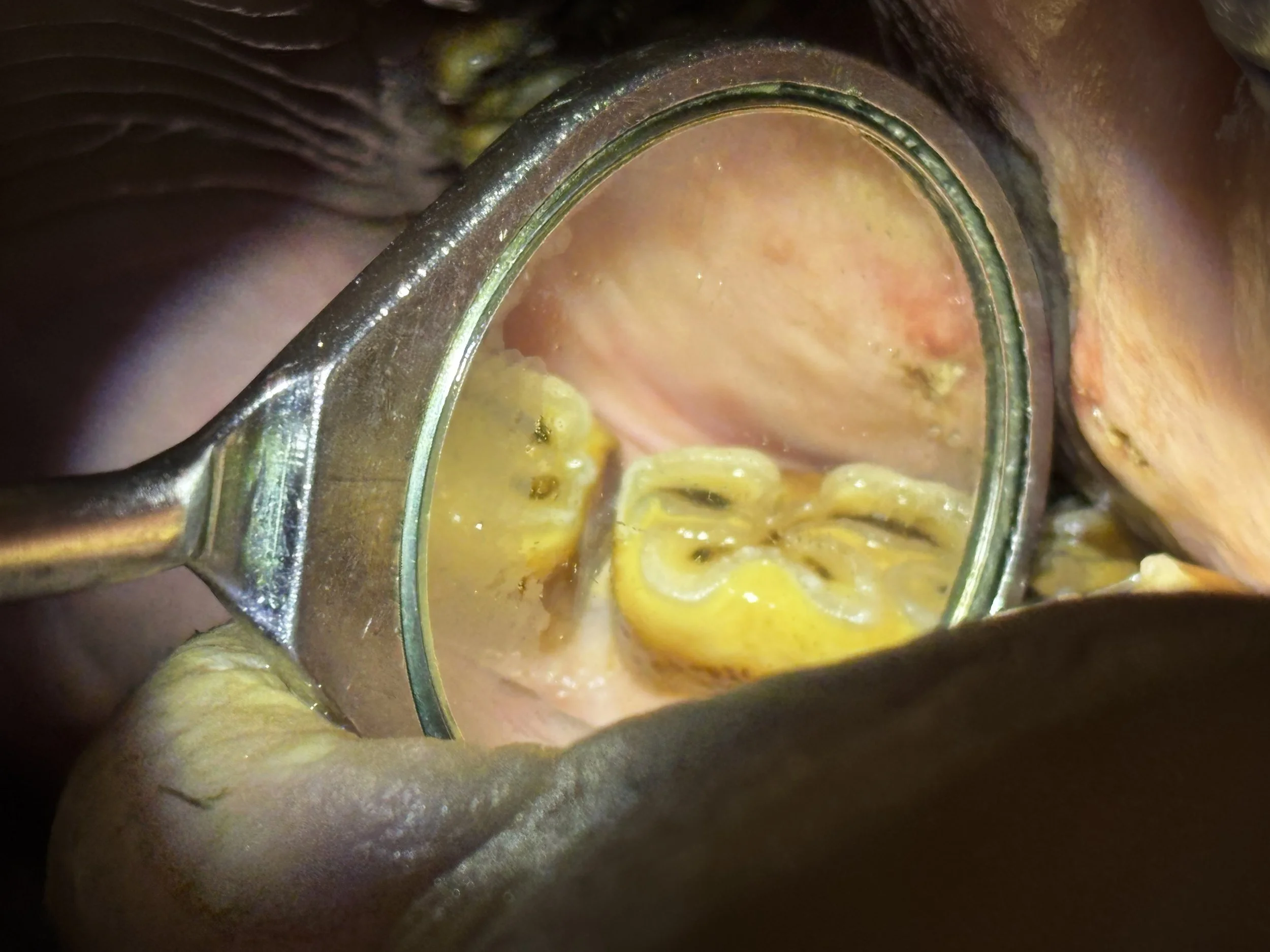
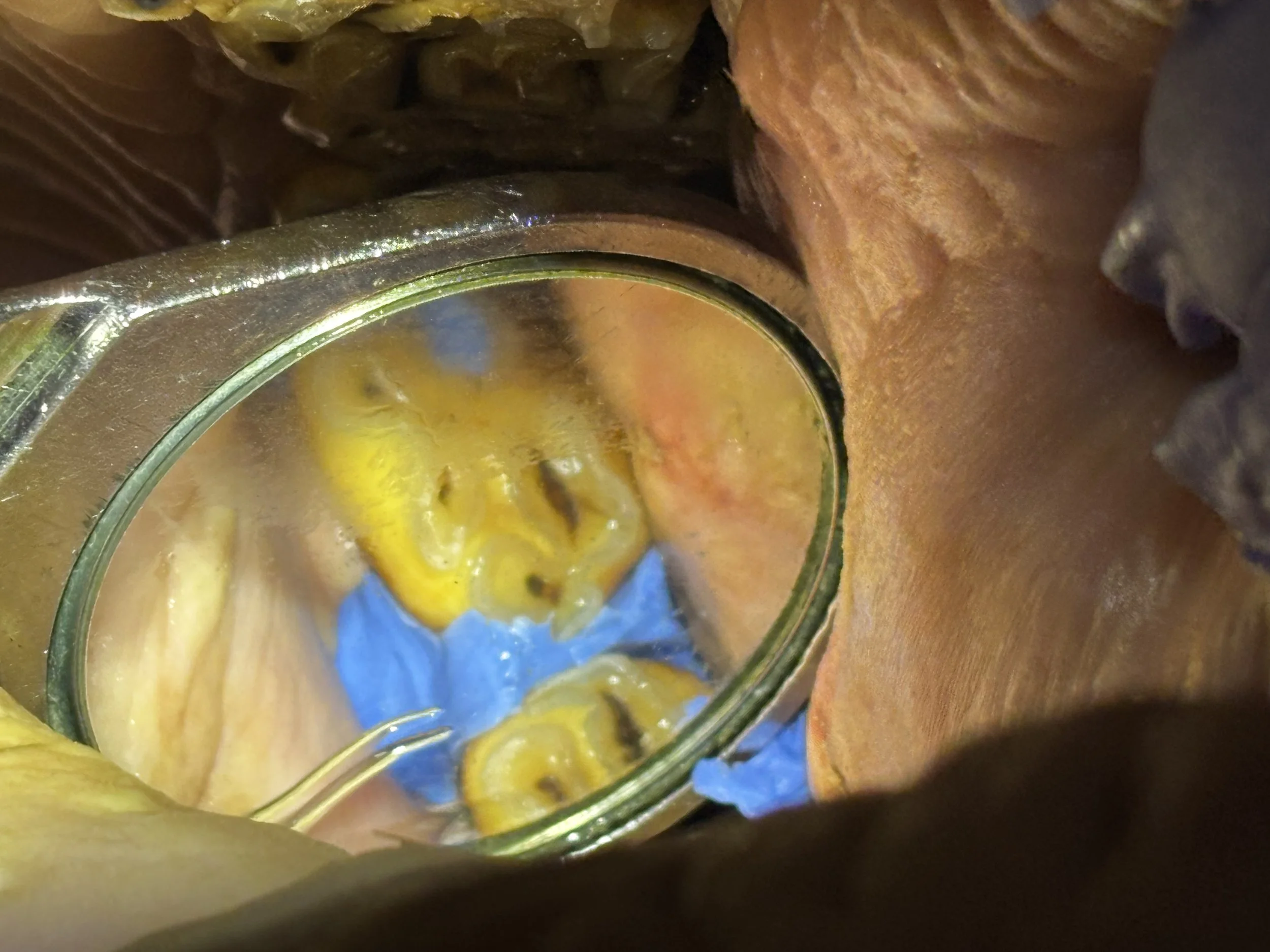
The left picture is showing an example of a diastema that is cleaned out, and then right has the dental impression material filling the space. The dental impression material is not permanent and will need to be replaced, when performing this treatment we will often put the horse on a bi annual dental visit if not already, with the severity sometimes dictating 3-4 month visits.
While routine odontoplasties (floating) can often relieve sharp enamel points that direct food into periodontal pockets, the best approach depends on the individual horse and the severity of its periodontal disease. In some cases we perform a targeted occlusal relief cut, carefully removing a small amount of tooth to eliminate pressure points and reduce food packing. When conservative treatments cannot control progression, or when the tooth is damaged or unstable because of surrounding tissue breakdown, extraction may be necessary.
Prevention and Ongoing Care
Prevention and ongoing dental care are important in maintaining your horse’s comfort and oral health. Regular comprehensive oral exams help identify problems early, and help decide what treatment might be right for your horse.
Concerned about your horse’s dental health?
If you are concerned about your horse’s dental health or periodontal disease contact Northeast Veterinary Dental Services to schedule an appointment. You can contact us here, or by phone or email.